
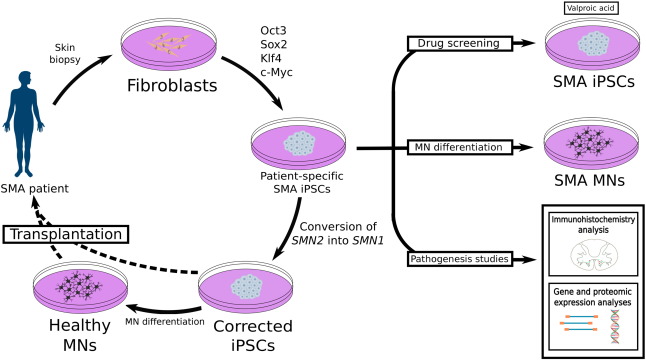
Spinal muscular atrophy (SMA) is a severe genetic disorder in which muscles gradually weaken due to the loss of motor neurons in the spinal cord. For many families, an SMA diagnosis becomes a serious challenge because the disease affects a child’s ability to sit, move, swallow, and even breathe. In the search for modern treatment options, patients increasingly turn to specialized medical centers that apply cellular technologies. On the page https://stemplus.clinic/disease-treatment/sma/, detailed information is provided about stem cell treatment for SMA, including therapy stages, patient management, and expected outcomes. That is why the question of real changes after such therapy has become especially relevant today.
What Happens in SMA and Why Early Therapy Matters
SMA develops due to a mutation in the SMN1 gene, leading to a deficiency of the SMN protein. This protein is essential for the survival of motor neurons — the cells that transmit signals from the spinal cord to the muscles. Without sufficient SMN levels, motor neurons gradually die.
According to international registries, the incidence of SMA is approximately 1 case per 6,000–10,000 newborns. Without treatment, severe forms of the disease can lead to significant respiratory failure within the first years of life.
It is important to understand:
- The earlier therapy begins, the greater the chance of preserving motor functions.
- Lost motor neurons cannot be restored, but their degeneration may be slowed.
- With prolonged disease progression, muscle atrophy becomes pronounced, limiting functional recovery.
For this reason, emphasis is placed on early diagnosis and комплексный treatment, including medication support, rehabilitation, and modern biotechnological approaches.
How Stem Cell Therapy Works in SMA
Stem cell therapy does not correct the SMN1 gene mutation but aims to create a more supportive environment for nervous tissue. Mesenchymal stem cells are used because of their anti-inflammatory and neuroprotective properties.
Main mechanisms of action include:
- reducing inflammation in nervous tissue;
- secreting growth factors that support neurons;
- improving microcirculation;
- stimulating regenerative processes in muscle and nerve tissue.
According to a number of clinical observations, some patients show stabilization of their condition and slower deterioration of motor function after stem cell therapy courses. However, outcomes depend significantly on the type of SMA, the patient’s age, and the stage of the disease.
After cell administration, neurological follow-up is required, including respiratory monitoring and assessment of motor skills using international scales such as HFMSE and CHOP INTEND. Only objective testing allows evaluation of real динамика.
Results Observed in Practice
Outcomes cannot be evaluated identically for all patients. In children with early-onset forms of SMA who begin therapy within the first months of life, the effect is generally more pronounced.
The following changes are most commonly observed:
- increased strength of proximal muscles;
- improved head and trunk control;
- development or consolidation of sitting skills;
- greater endurance;
- reduced frequency of respiratory complications.
Clinical observations report that in 50–70% of patients, stabilization of the disease can be achieved for 6–12 months following a therapy course. Some children show an increase of 2–5 points on motor scales, which is considered clinically meaningful in the context of SMA.
It is important to understand that:
- The therapy does not completely cure SMA.
- The effect is more often expressed as slowed disease progression.
- Sustainable results require a comprehensive approach — medication, physical therapy, and respiratory support.
Parents often struggle with expectations. Some anticipate rapid and dramatic improvement, but in reality, progress is usually gradual and moderate.
Factors Influencing Treatment Effectiveness
The effectiveness of therapy depends on several key factors. Ignoring them may lead to incorrect evaluation of outcomes.
Main factors include:
- type of SMA (I, II, III);
- age at treatment initiation;
- degree of muscle atrophy;
- presence of contractures and deformities;
- overall respiratory condition;
- combination with baseline pharmacological therapy.
For example, in SMA type I, if treatment begins before severe respiratory insufficiency develops, the likelihood of stabilization is higher. In late-stage cases, possibilities are more limited.
Rehabilitation also plays a crucial role. Without regular physical therapy, massage, and breathing exercises, the potential of stem cell therapy decreases. This is a common issue: patients complete the therapy course but underestimate the importance of consistent follow-up work.
Patients with SMA after stem cell therapy most often demonstrate stabilization of their condition, moderate improvement in motor skills, and slower disease progression. This is not a miracle method and not a complete cure, but rather one element of комплексного лечения. Real results depend on disease stage, age at therapy initiation, and systematic rehabilitation. A balanced approach, objective monitoring of progress, and collaboration with an experienced medical team are key conditions for achieving the best possible outcome.