
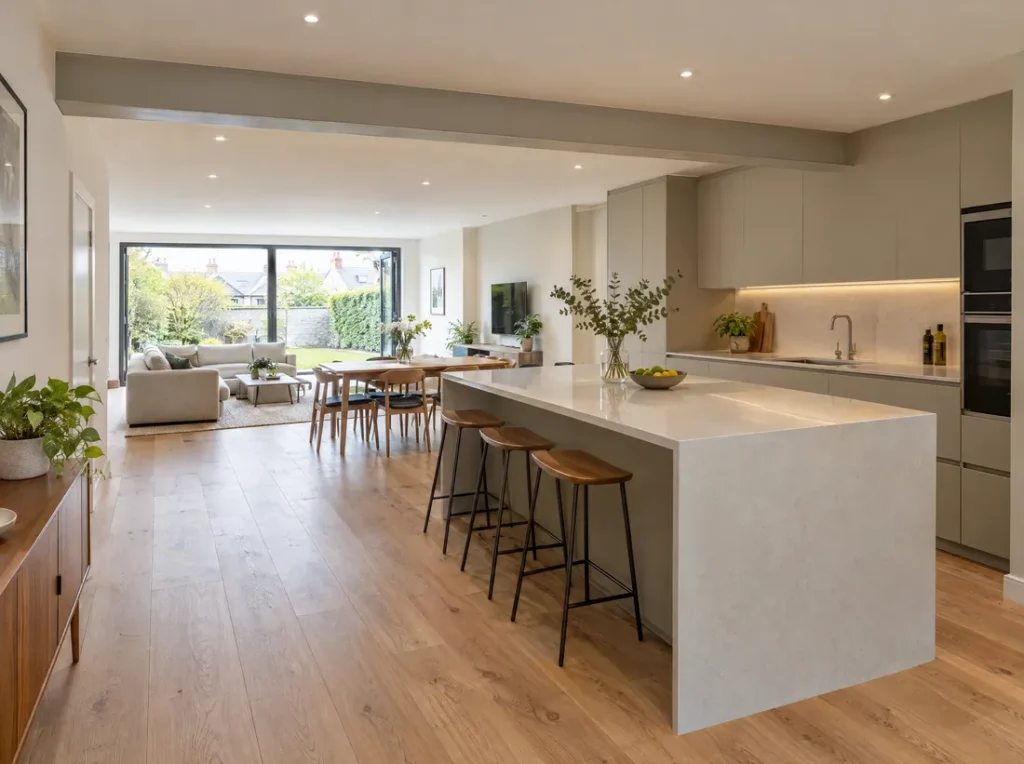
A comprehensive apartment renovation makes it possible to completely update the living space, starting with engineering systems and ending with decorative finishing. This approach is especially convenient for owners of new-build apartments and older housing that requires major changes. A professional comprehensive renovation involves the consistent completion of all renovation work while taking into account the condition of the premises, the owner’s wishes, and the approved budget. As a result, the apartment becomes not only more attractive, but also more comfortable for everyday living.
Apartment Preparation and Renovation Planning
A high-quality renovation begins with an assessment of the technical condition of the premises. Specialists inspect the walls, floors, ceilings, electrical wiring, and plumbing systems. This helps identify problems in advance that may affect the cost and duration of the work.
The preparation stage includes:
- Taking measurements and preparing a floor plan.
- Developing a design project with furniture placement.
- Calculating the required amount of construction materials.
- Preparing a cost estimate and work schedule.
- Removing old finishes and unnecessary structures.
Special attention is paid to the layout. Moving partitions or changing the location of the kitchen or bathroom may require approvals. Therefore, such decisions should be made before construction work begins.
Replacement of Engineering Systems
Electrical wiring, water supply, and heating directly affect the safety and comfort of living. In older apartments, these systems often require complete replacement because the existing infrastructure was not designed for modern equipment.
As part of a comprehensive renovation, the following work is carried out:
- Replacement of electrical wiring, installation of circuit breakers and outlets.
- Installation of water supply and sewage pipes.
- Installation of radiators and modernization of the heating system.
- Preparation of connections for household appliances.
- Installation of ventilation equipment.
The number of electrical circuits is calculated based on the power of the connected appliances. For example, a separate power line is usually provided for an electric cooktop.
After the engineering systems are installed, the tightness of connections, proper operation of equipment, and electrical safety are checked. Testing makes it possible to identify defects before pipes and cables are covered with finishing materials.
Rough Work and Surface Preparation
The next stage is aimed at creating a level and durable base for decorative finishing. Mistakes during surface preparation can lead to cracks, unevenness, and premature damage to the finishes.
The main work includes:
- Leveling walls with plaster.
- Installing a floor screed.
- Applying putty to surfaces.
- Priming the bases.
- Installing plasterboard structures.
The drying time of a cement screed depends on its thickness, the composition of the mixture, and the conditions in the room. For example, for a standard screed 40–50 mm thick, preparation for installing a moisture-sensitive floor covering may take several weeks. The readiness of the base is determined by measuring residual moisture.
Final Finishing and Equipment Installation
Once the preparation work is complete, the apartment gradually takes on its final appearance. At this stage, materials specified in the design project and approved estimate are used.
The walls are painted or covered with wallpaper, while laminate, engineered wood flooring, or tiles are installed on the floor. Interior doors, baseboards, lighting fixtures, and plumbing fixtures are installed. In the bathroom, special attention is paid to waterproofing because mistakes can lead to leaks.
The final stage also includes installing switches, connecting household appliances, and checking that all equipment operates properly.
Quality Control and Apartment Acceptance
A comprehensive renovation is considered complete after all completed work has been inspected. The owner should make sure that the result complies with the project and the contract.
The evenness of surfaces, the quality of tile joints, and the operation of outlets, lighting, and plumbing are checked. Any identified defects are recorded in a list of issues for subsequent correction.
A comprehensive renovation combines many interconnected processes, so the correct sequence of work and technical supervision are especially important. A detailed estimate, high-quality materials, and compliance with construction technologies help avoid additional expenses and result in an apartment that is fully ready for comfortable living.