
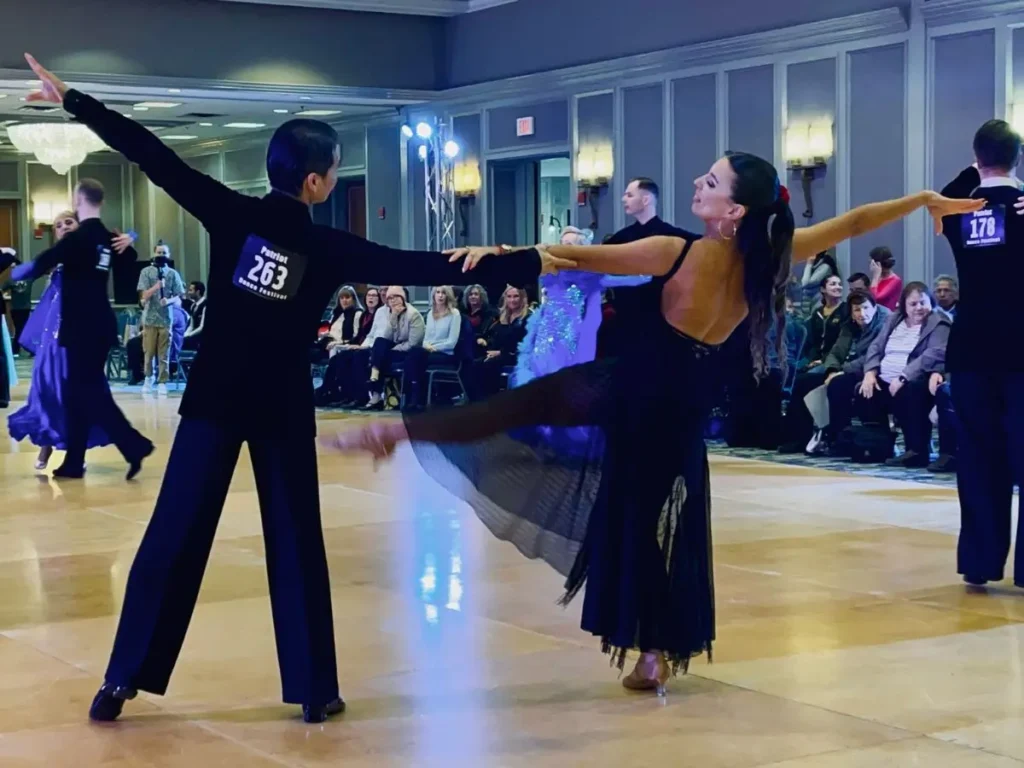
Competitive ballroom dancing remains one of the most demanding forms of performing arts. Success depends not only on natural talent but also on years of training, discipline, and the ability to work effectively as a team. Many professional organizations and dance studios regularly publish ballroom couples jobs to find promising partners, instructors, and performers, making competition within the industry consistently high. According to international dance organizations, the journey from a beginner athlete to a professional-level performer can take between 7 and 12 years of regular training.
Technical Training and Mastery of Dance Styles
Every successful dance couple is built on a strong technical foundation. It is not enough to simply move gracefully to music. Dancers must understand movement mechanics, body control, balance, and partner interaction.
Key areas of training include:
- Standard ballroom dances (Waltz, Tango, Viennese Waltz, Foxtrot, Quickstep);
- Latin American dances (Cha-Cha-Cha, Samba, Rumba, Paso Doble, Jive);
- musicality and rhythm awareness;
- posture control;
- movement coordination;
- stage performance skills.
Even experienced competitors regularly face technical challenges. Sometimes a minor balance issue or incorrect body position can significantly reduce judges’ scores during competitions.
Communication and Partnership Skills
A dance career is built on the interaction between two people. Many promising couples stop competing not because of a lack of talent but because of communication difficulties.
Successful cooperation requires:
- The ability to listen to a partner.
- Willingness to accept constructive criticism.
- Emotional stability.
- Responsibility for shared results.
- The ability to resolve conflicts without disrupting the training process.
Sports psychologists note that the quality of communication directly influences competitive performance. When partners trust one another, their movements appear more natural, coordinated, and synchronized.
Physical Endurance and Athletic Conditioning
Ballroom dancing requires serious physical preparation. During competitions, dancers may spend several hours on the floor performing demanding routines with very limited recovery time.
Particular attention is given to:
- developing cardiovascular endurance;
- strengthening back muscles;
- training the legs and core muscles;
- improving flexibility;
- maintaining a healthy body weight;
- recovering effectively after intense training.
A lack of physical conditioning often leads to fatigue during the later rounds of a tournament, negatively affecting the quality of performance.
Psychological Resilience and Public Performance Skills
Even perfectly prepared couples can experience nervousness before stepping onto the dance floor. Competitive pressure, coaches’ expectations, and strong rivalry often become significant challenges.
Professional dancers benefit from:
- regular performances in front of audiences;
- working with a sports psychologist;
- focus and concentration techniques;
- breathing exercises;
- a well-balanced rest and recovery routine.
Many athletes admit that during their first years of competition, their biggest challenge was not technical ability but the fear of making mistakes in front of judges and spectators.
Professional Growth and Career Development
The modern dance industry offers numerous opportunities for professional advancement. In addition to competing, dancers can build careers as instructors, choreographers, show producers, and coaches.
For long-term success, it is important to:
- continuously improve professional qualifications;
- attend workshops and seminars;
- study modern teaching methods;
- expand professional networks and industry connections.
According to industry experts, professionals who consistently invest time in education and skill development have significantly greater opportunities for career advancement than those who rely solely on basic knowledge and experience.
A successful ballroom dance couple career is built on a combination of technical excellence, physical conditioning, psychological resilience, and strong partnership skills. Talent alone is not enough. The highest levels of success are achieved by those who are willing to spend years refining their craft, overcoming challenges, and continually improving. This comprehensive approach not only leads to competitive achievements but also helps create a long-term professional career in the world of ballroom dancing.